Showing posts with label militarism. Show all posts
Monday, December 4, 2017
Guns and Oil -- good, but a bit unsettling intro pic for Global Energy. What do Idaho and Texas have in common?
Illuminating interview with Guns and Oil Beer founder Cary Prewitt (warning: offensive images and language in this interview and on this website):
https://totalfratmove.com/dudes-doing-business-guns-oil-beers-cary-prewitt/
Key quote: "I came up with the name 'Guns and Oil' which I thought really represented the great American values, and our purpose statement today is to be purveyors of the great American values... boldness, character, opportunity, grit, and innovation..."
Thursday, November 16, 2017
Global Energy and the American Dream: As we have been saying for years, we are killing civilians in the name of fighting terrorism, in what is really a war fueled by a long history of oil militarism, and the killing continues
Monday, May 29, 2017
What we've been talking about for awhile now: the increasing criminalization of protest, the militarization of policing, and the corruption of democracy and rule of law through privatized (paramilitary) policing: Leaked Documents Reveal Counterterrorism Tactics Used at Standing Rock to “Defeat Pipeline Insurgencies”
All of which offers more support for our thesis about the inherent (and increasing) criminality of the fossil fuel industry. More troubling, we see the blurred lines between public law enforcement and these private mercenary contractors. Troubling signs of the lengths that the fossil fuel industry and those sectors of law enforcement without the principle to question them will go to defend the interests of private fossil fuel capital.
Leaked Documents Reveal Counterterrorism Tactics Used at Standing Rock to “Defeat Pipeline Insurgencies”
See also, Ruth Hopkins' earlier report on private security at NoDAPL: http://www.truth-out.org/opinion/item/40681-footing-the-15-million-bill-for-the-dakota-access-pipeline-s-private-army
Leaked Documents Reveal Counterterrorism Tactics Used at Standing Rock to “Defeat Pipeline Insurgencies”
See also, Ruth Hopkins' earlier report on private security at NoDAPL: http://www.truth-out.org/opinion/item/40681-footing-the-15-million-bill-for-the-dakota-access-pipeline-s-private-army
Labels:
#NoDAPL,
Energy Transfer Partners,
indigenous,
militarism,
pipeline,
protest
Thursday, February 9, 2017
A "New Approach to the Middle East" - Hadley and Albright's road show, and my brief notes on their 'strategic report'
Bret Gustafson
February 9, 2017
I compiled these notes after a summary review of the Hadley-Albright presentations and their report. It is neither new, nor encouraging, but exemplifies what has been a longer history of US oil-military action in the region, as detailed and critiqued by Mitchell in Carbon Democracy.
The Atlantic Council is a think tank focused on US-Europe relations with programs in a range of areas, including the Middle East. In 2014 it was featured in a NY Times investigation into the influence of foreign governments on US think tanks. In this case, it was suggested that scholars at the Atlantic Council were influenced in certain directions, in one case, not to criticize the military government of Egypt (which receives significant amounts of US foreign aid). The Rafik Hariri Center for the Middle East was funded by the family of, and named after, Rafik Hariri, a former Prime Minister of Lebanon, assassinated in 2005. It thus appears to be the case that the Atlantic Council, staffed and advised by prominent members of the national security community, maintains close relationships with the military-oil oriented status quo in the Middle East.
Madeleine Albright and Stephen Hadley, who came to WUSTL on February 8, 2017, are the co-chairs of the Middle East Strategy Task Force at the Atlantic Council. As I wrote elsewhere, briefly, they are both associated with a "hawkish" (militaristic) approach to the Middle East, Hadley even moreso than Albright. Hadley has been deemed a 'war criminal' by the feminist and women-led anti-war organization Code Pink.
Hadley and Albright oversaw the production of a "Final Report" on the "new" approach to the Middle East, which is the basis of their ongoing 'educational' tour that brought them to St. Louis. The list of 'senior advisors' to the co-chairs on the report is a who's who of defense community, NATO, and Middle East country officials (including Saudi Arabia), along with conservative representatives of the US think-tank and academia (report, pp. i-ii).
The task force was convened in February of 2015. It is reasonable to think that the idea was that the report, in some way, would inform US foreign policy once Hillary Clinton (or one of the non-Trump Republicans) was elected. It looks like Trump threw a monkey-wrench in that plan so the road show is an attempt to promote it against Trump's rather chaotic - though sometimes brutally honest – talk about cutting heads off and taking oil in the Middle East.
The language of the report is one of "development" and "opportunities" for creating a "stable and peaceful order of sovereign states". To wit, from the executive summary:
Note how the crisis is deemed to emanate 'from' the Middle East, a place where outsiders have 'interests' and may play a role. Note also that among US vital interests, there is no mention of oil. This exemplifies what I (and Mitchell) might call a politics of 'detachment' - the notion that there is an inside and outside, and that causes of the current situation are largely internal to the region. This is empirically wrong and discursively dooms the project from the start.
The basic "new" strategy has two "prongs" [note the militaristic language]. First, military force exerted by "external powers" (i.e. the US) and second, 'development' efforts to "unlock the region's rich, but largely untapped, human capital – especially the underutilized talents of youth and women" (p.2). This sounds reminiscent of the discourses of self-determination and intervention, and the 'good will' imperialism of 'development' that Mitchell describes for the last 60-70 years of US policy.
Military action
In short, ramp up US military activities in Syria, Iraq, Libya, and Yemen to "wind down these civil wars."
Push for a two-state solution in Israel-Palestine (but makes no statement about settlements).
Contain Iran so it does not become hegemonic. This is a nod to Israel and Saudi Arabia, who both oppose Iran.
Development (aka "unleashing the region's human and economic potential")
"develop the region's human capital"
Translation: education reform without large bureaucracies (the neoliberal model) and encouragement of American-style education and universities. Updated 2/13/17: After reflecting on Mitchell (ch. 4), you should see quite clearly how this story of the need to improve the "human capital" of the Middle East not only masks a not-so-subtle colonial racism, but echoes the projects of racial improvement from decades past. This is the heart of "development" as a form of imperial or indirect control.
"Big Bang" regulatory reforms
Translation: promotion of a free-market agenda, the discourse of "entrepreneurialism", promotion of private industry, free trade "trade barriers must be eliminated", promote foreign investment through deregulation, nothing said about NOCs, but the message is to make the region safe for foreign corporations
"citizen participation in civic problem-solving"
Translation: introduce the category of 'civic' and 'civic groups' as central in the society, to correspond with weakening of labor unions and other forms of political identification and engagement, position support for women as a key justification of intervention
"good governance" by "local governments"
Translation: push for decentralization, a long-standing mantra of neoliberal reformism, which gives more influence to large corporations and capital vis-a-vis the state, a technical approach to "solving problems" rather than a political approach to addressing political and economic inequality
"regional framework for dialogue"
Translation: make a new regional organization that weakens the influence of the Arab League (and maybe OPEC?)
"Regional Development Fund for Reconstruction and Reform"
Translation: Create a Marshall Plan or World Bank style fund that could exert influence and interventionism by offering or withholding credit in exchange for certain policy adoptions, i.e. "encourage and drive private sector development".
Where's the oil? In no part of the executive summary is the word oil mentioned, or even obliquely referenced, except in the part relating to American interests, where one might infer that helping the "American economy" and "enabling American global military operations" means, making sure the oil keeps flowing as it has been. [Note, it is curious that a new approach "for" the Middle East and "from" the Middle East is to advocate for and "enable" American military operations. That in itself is a bit mind-boggling but reveals not so subtly the hand of the oil-militarism nexus at work.]
The word oil is only explicitly mentioned in later sections (p 15-16), in the context of the importance of American exports to the region (though arms and military equipment are not mentioned) and American economic stability. And again, briefly, oil prices are referenced in the links between lower oil prices and changes in Saudi government and education (p37) (aspirational, not yet real); the conflict between Kurds and Iraqi national leadership (p 68); and some efforts of US universities to establish campuses in places like Doha and Abu Dhabi (p86).
Note the focus on the 'price' of oil with no mention of the problematic relationship of weapons for oil, or the close historical linkage between this relationship and the reproduction of oligarchic and violent rule across the region (c.f. Mitchell).
There is absolutely no mention of climate change or global warming. The word climate appears twice, once in reference to the "macroeconomic climate" (53) and once in reference to a "regulatory climate" (88).
The word "environment" appears only once as such, in reference to some initiatives for youth in Jordan. Otherwise it appears repeatedly but is used in what we might call the thinking of economic (free-market) calculation: in reference to "security environment" or "enabling environment" (96) or "investment environment" (88) or "entrepreneurial environment" or "legal and regulatory environment" (e.g. 87), all of which are used to orient discourse toward the pro-business, free-market approach to 'reform'.
None of this sounds very "new" nor does it address the fundamental problem of the American oil-weapons nexus with the Middle East, nor the problem of the overconsumption of oil and global warming.
Whereas Mitchell argues that oil is at the heart of the political machinery that currently exists, and that the political machineries of the West and the Middle East are entangled through oil, this report is one of economic calculation and imperialistic approaches to so-called 'self-determination' (now through development) that obfuscates that reality.
It thus exemplifies the way of thinking and the longer historical patterns that Mitchell sets out to critique.
St. Louis Public Radio wrote a soft-ball piece on the visit here. The article is revealing, since it shows how this tour was (mis)educating young people both on campus and in high schools, who went away feeling rosy and 'inspired' about our urge to 'help' the Middle East, but with nothing to say about the nexus between oil, militarism, and climate change.
February 9, 2017
I compiled these notes after a summary review of the Hadley-Albright presentations and their report. It is neither new, nor encouraging, but exemplifies what has been a longer history of US oil-military action in the region, as detailed and critiqued by Mitchell in Carbon Democracy.
The Atlantic Council is a think tank focused on US-Europe relations with programs in a range of areas, including the Middle East. In 2014 it was featured in a NY Times investigation into the influence of foreign governments on US think tanks. In this case, it was suggested that scholars at the Atlantic Council were influenced in certain directions, in one case, not to criticize the military government of Egypt (which receives significant amounts of US foreign aid). The Rafik Hariri Center for the Middle East was funded by the family of, and named after, Rafik Hariri, a former Prime Minister of Lebanon, assassinated in 2005. It thus appears to be the case that the Atlantic Council, staffed and advised by prominent members of the national security community, maintains close relationships with the military-oil oriented status quo in the Middle East.
Madeleine Albright and Stephen Hadley, who came to WUSTL on February 8, 2017, are the co-chairs of the Middle East Strategy Task Force at the Atlantic Council. As I wrote elsewhere, briefly, they are both associated with a "hawkish" (militaristic) approach to the Middle East, Hadley even moreso than Albright. Hadley has been deemed a 'war criminal' by the feminist and women-led anti-war organization Code Pink.
Stephen Hadley, who spoke today @wustl, not only lied his *** off, he is on @codepink 's war criminals list. https://t.co/vfLfGwH6HD— Bret Gustafson (@bretgustafson) February 8, 2017
Hadley and Albright oversaw the production of a "Final Report" on the "new" approach to the Middle East, which is the basis of their ongoing 'educational' tour that brought them to St. Louis. The list of 'senior advisors' to the co-chairs on the report is a who's who of defense community, NATO, and Middle East country officials (including Saudi Arabia), along with conservative representatives of the US think-tank and academia (report, pp. i-ii).
The task force was convened in February of 2015. It is reasonable to think that the idea was that the report, in some way, would inform US foreign policy once Hillary Clinton (or one of the non-Trump Republicans) was elected. It looks like Trump threw a monkey-wrench in that plan so the road show is an attempt to promote it against Trump's rather chaotic - though sometimes brutally honest – talk about cutting heads off and taking oil in the Middle East.
The language of the report is one of "development" and "opportunities" for creating a "stable and peaceful order of sovereign states". To wit, from the executive summary:
...a global crisis emanating from the Middle East convulsing much of the region in instability and violence, while projecting the threat and reality of terrorism and disruption far beyond...There are opportunities in the Middle East, not just challenges.
To be able to harness these opportunities, it is necessary to change the political trajectory of the region from state failure and civil war toward a stable and peaceful order of sovereign states. It goes without saying that the states and peoples of the Middle East have the greatest stake in what happens there. Yet the United States also has vital interests that impact both the lives and livelihoods of Americans and their families: keeping citizens safe from terrorism; protecting the US economy; empowering friends and allies; enabling American global military operations; preventing the spread of weapons of mass destruction; and averting destabilizing humanitarian disasters.
Advancing American interests will require far more than a unilateral “American strategy.” Outsiders cannot x what ails the Middle East. Neither can they avoid its global consequences through some combination of defense, disengagement, and containment.
The basic "new" strategy has two "prongs" [note the militaristic language]. First, military force exerted by "external powers" (i.e. the US) and second, 'development' efforts to "unlock the region's rich, but largely untapped, human capital – especially the underutilized talents of youth and women" (p.2). This sounds reminiscent of the discourses of self-determination and intervention, and the 'good will' imperialism of 'development' that Mitchell describes for the last 60-70 years of US policy.
Military action
In short, ramp up US military activities in Syria, Iraq, Libya, and Yemen to "wind down these civil wars."
Push for a two-state solution in Israel-Palestine (but makes no statement about settlements).
Contain Iran so it does not become hegemonic. This is a nod to Israel and Saudi Arabia, who both oppose Iran.
Development (aka "unleashing the region's human and economic potential")
"develop the region's human capital"
Translation: education reform without large bureaucracies (the neoliberal model) and encouragement of American-style education and universities. Updated 2/13/17: After reflecting on Mitchell (ch. 4), you should see quite clearly how this story of the need to improve the "human capital" of the Middle East not only masks a not-so-subtle colonial racism, but echoes the projects of racial improvement from decades past. This is the heart of "development" as a form of imperial or indirect control.
"Big Bang" regulatory reforms
Translation: promotion of a free-market agenda, the discourse of "entrepreneurialism", promotion of private industry, free trade "trade barriers must be eliminated", promote foreign investment through deregulation, nothing said about NOCs, but the message is to make the region safe for foreign corporations
"citizen participation in civic problem-solving"
Translation: introduce the category of 'civic' and 'civic groups' as central in the society, to correspond with weakening of labor unions and other forms of political identification and engagement, position support for women as a key justification of intervention
"good governance" by "local governments"
Translation: push for decentralization, a long-standing mantra of neoliberal reformism, which gives more influence to large corporations and capital vis-a-vis the state, a technical approach to "solving problems" rather than a political approach to addressing political and economic inequality
"regional framework for dialogue"
Translation: make a new regional organization that weakens the influence of the Arab League (and maybe OPEC?)
"Regional Development Fund for Reconstruction and Reform"
Translation: Create a Marshall Plan or World Bank style fund that could exert influence and interventionism by offering or withholding credit in exchange for certain policy adoptions, i.e. "encourage and drive private sector development".
Where's the oil? In no part of the executive summary is the word oil mentioned, or even obliquely referenced, except in the part relating to American interests, where one might infer that helping the "American economy" and "enabling American global military operations" means, making sure the oil keeps flowing as it has been. [Note, it is curious that a new approach "for" the Middle East and "from" the Middle East is to advocate for and "enable" American military operations. That in itself is a bit mind-boggling but reveals not so subtly the hand of the oil-militarism nexus at work.]
The word oil is only explicitly mentioned in later sections (p 15-16), in the context of the importance of American exports to the region (though arms and military equipment are not mentioned) and American economic stability. And again, briefly, oil prices are referenced in the links between lower oil prices and changes in Saudi government and education (p37) (aspirational, not yet real); the conflict between Kurds and Iraqi national leadership (p 68); and some efforts of US universities to establish campuses in places like Doha and Abu Dhabi (p86).
Note the focus on the 'price' of oil with no mention of the problematic relationship of weapons for oil, or the close historical linkage between this relationship and the reproduction of oligarchic and violent rule across the region (c.f. Mitchell).
There is absolutely no mention of climate change or global warming. The word climate appears twice, once in reference to the "macroeconomic climate" (53) and once in reference to a "regulatory climate" (88).
The word "environment" appears only once as such, in reference to some initiatives for youth in Jordan. Otherwise it appears repeatedly but is used in what we might call the thinking of economic (free-market) calculation: in reference to "security environment" or "enabling environment" (96) or "investment environment" (88) or "entrepreneurial environment" or "legal and regulatory environment" (e.g. 87), all of which are used to orient discourse toward the pro-business, free-market approach to 'reform'.
None of this sounds very "new" nor does it address the fundamental problem of the American oil-weapons nexus with the Middle East, nor the problem of the overconsumption of oil and global warming.
Whereas Mitchell argues that oil is at the heart of the political machinery that currently exists, and that the political machineries of the West and the Middle East are entangled through oil, this report is one of economic calculation and imperialistic approaches to so-called 'self-determination' (now through development) that obfuscates that reality.
It thus exemplifies the way of thinking and the longer historical patterns that Mitchell sets out to critique.
St. Louis Public Radio wrote a soft-ball piece on the visit here. The article is revealing, since it shows how this tour was (mis)educating young people both on campus and in high schools, who went away feeling rosy and 'inspired' about our urge to 'help' the Middle East, but with nothing to say about the nexus between oil, militarism, and climate change.
Labels:
Albright,
Hadley,
Iraq,
ISIS,
Middle East,
militarism,
oil,
Saudi Arabia,
Yemen
Tuesday, January 31, 2017
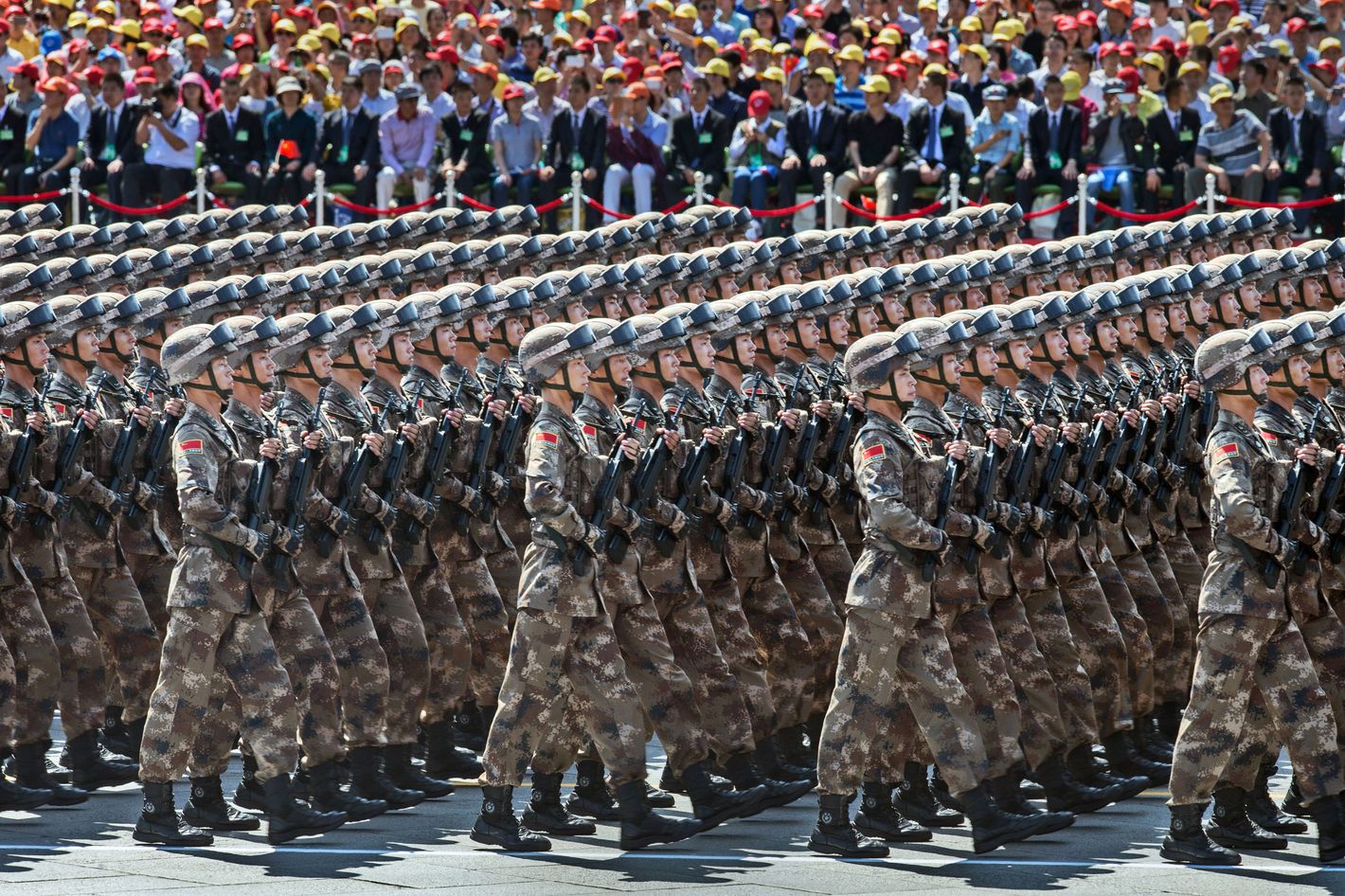
Tillerson, Exxon, and China's claim on offshore oil in the South China Sea: What's the end-game?
Tillerson's boast...
“We’re going to have to send China a clear signal that, first, the island-building stops,” Tillerson told the Senate Foreign Relations Committee Wednesday, likening China’s activities in the South China Sea to Russia’s annexation of Crimea. “And second, your access to those islands also is not going to be allowed.”China claims sovereignty over most of the South China Sea — and thus, most of the 11 billion barrels of oil and 190 trillion cubic feet of natural gas that lie beneath it."
China responds...
“Unless Washington plans to wage a large-scale war in the South China Sea, any other approaches to prevent Chinese access to the islands will be foolish,” the Communist Party–controlled Global Times wrote in an editorial Friday. “If Trump’s diplomatic team shapes future Sino-U.S. ties as it is doing now, the two sides had better prepare for a military clash.”
What are the interests at stake...
"If America were to pursue a foreign policy dictated by the interests of Exxon’s shareholders, it would involve softening relations with Russia and confronting China in its disputed waters. A significant faction of Trump’s advisers appear interested in such a policy."
|
Ready and waiting. Photo: Kevin Frayer/Getty Images
|
Thursday, February 26, 2015
Democracy, Deferred: On Nigeria's Dysfunctional Election
On Nigeria: Lessons of oil wealth: corruption, authoritarian rule, militarization, neglected infrastructure and agricultural sectors, regional tensions. Elections delayed. Part of our daily commute.
Democracy, Deferred: On Nigeria's Dysfunctional Election
By the (Nigerian) author of the great book Americanah, Chimamanda Ngozi Adichie
Democracy, Deferred: On Nigeria's Dysfunctional Election
By the (Nigerian) author of the great book Americanah, Chimamanda Ngozi Adichie
Monday, January 26, 2015
Wow. How deep is the oily friendship? Joint Chiefs of Staff Chief Dempsey Sponsors Essay Competition to Honor Saudi King
Wednesday, January 21, 2015
Lecture 3 - Links and Videos related to lecture "Oil and American Cultural History"
Current Events
1.
Oil price drops means bust cycle hitting towns like Midland, TX
cyclicality of fossil fuel economies
2.
State of the Union Address
“climate change” (not “global warming”) &
Republican
response
“[white]
working people”; the “Keystone Jobs Bill” Obama will “block good American jobs”
no climate mention…Republicans censored version; Boehner: "inadvertent"
3. Peabody
Energy named Energy Company of the Year by Platts
Greg Boyce, CEO stock-price way down but “it will come back”
& “technology solutions, not regulatory solutions” – Peabody response to#SOTU "pain at the plug"
4. NASCAR, Dale Earnhardt, Jr., ACCCE & ‘clean coal’ state of the union
& Business Owner ad
ACCCE: American Coalition for Clean CoalElectricity (industry front group, includes Ameren, Peabody, & number of
other companies, now hidden), ties to ALEC
Recent publication “The Social Benefitsof Carbon” (see my earlier discussion of the ACCCE's view of science with regard to Peabody, Ameren, and WUSTL connections).
Sourcewatch page on ACCCE; Polluter Watch & Wikipedia ACCCE forgery scandal
ACCCE (aka "America's Power" on Twitter:
Obama is on a “climate crusade” with “calamitous consequences”
Labels:
ACCCE,
ameren,
climate,
global warming,
history,
imperialism,
lecture3-history,
militarism,
music,
obama,
oil,
peabody,
racism
Subscribe to:
Posts (Atom)


